
Wstecz
Prawo sportowe 09.05.2024

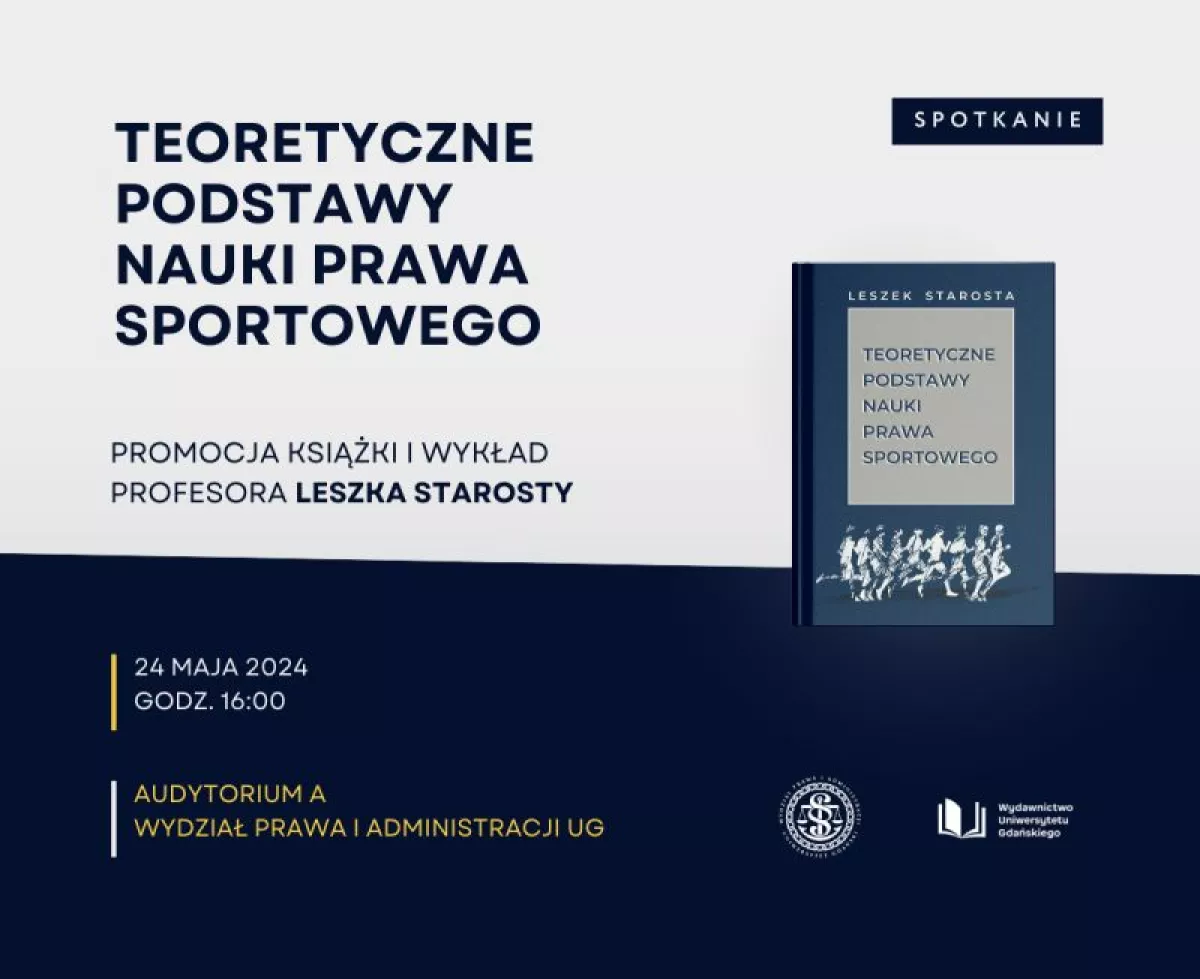
[Prawo sportowe / sports law] Promocja książki Prof. L. Starosty "Teoretyczne podstawy nauki prawa sportowego"

[Prawo sportowe] Promocja książki Prof. L. Starosty "Teoretyczne podstawy nauki prawa sportowego"

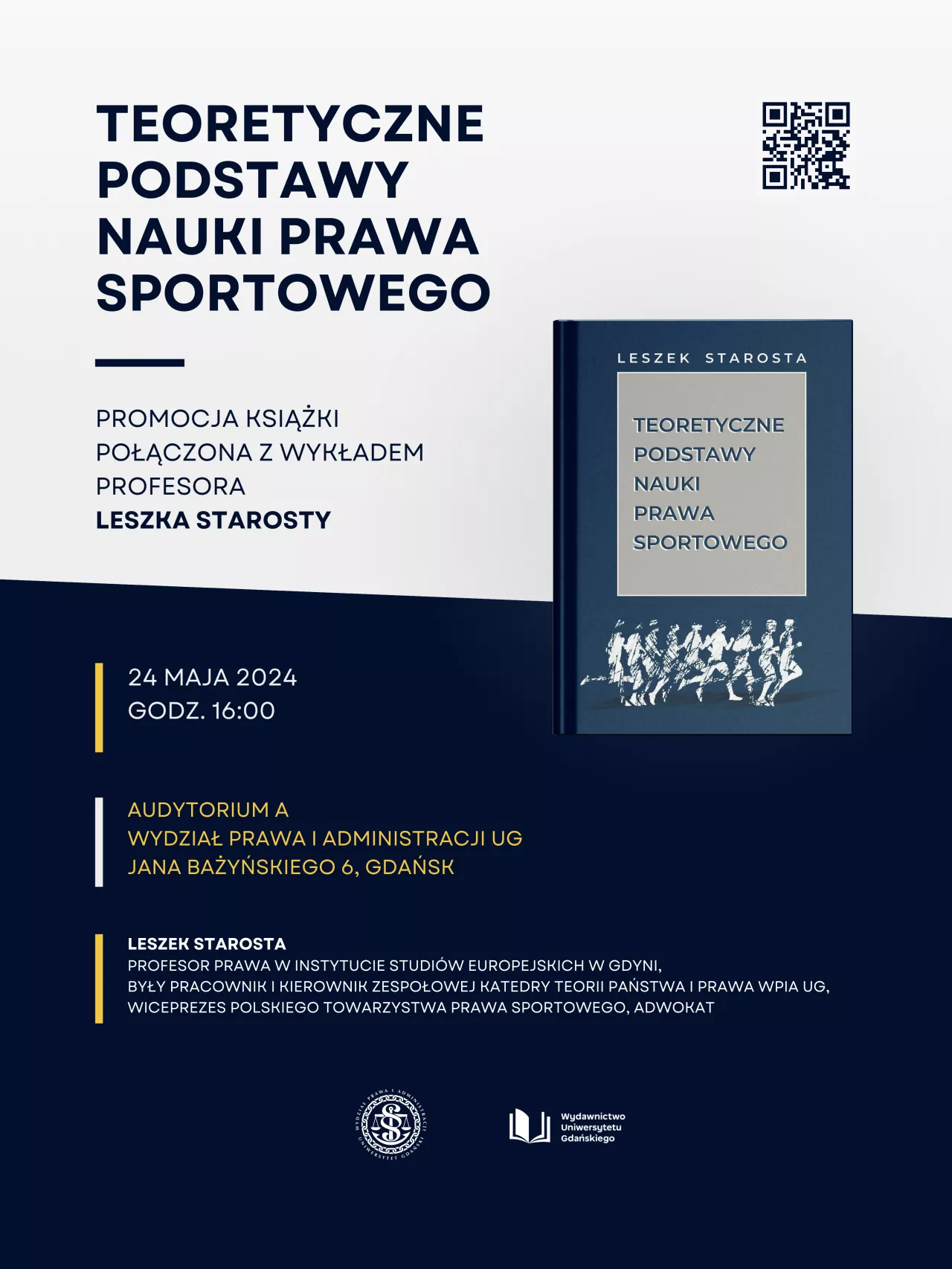
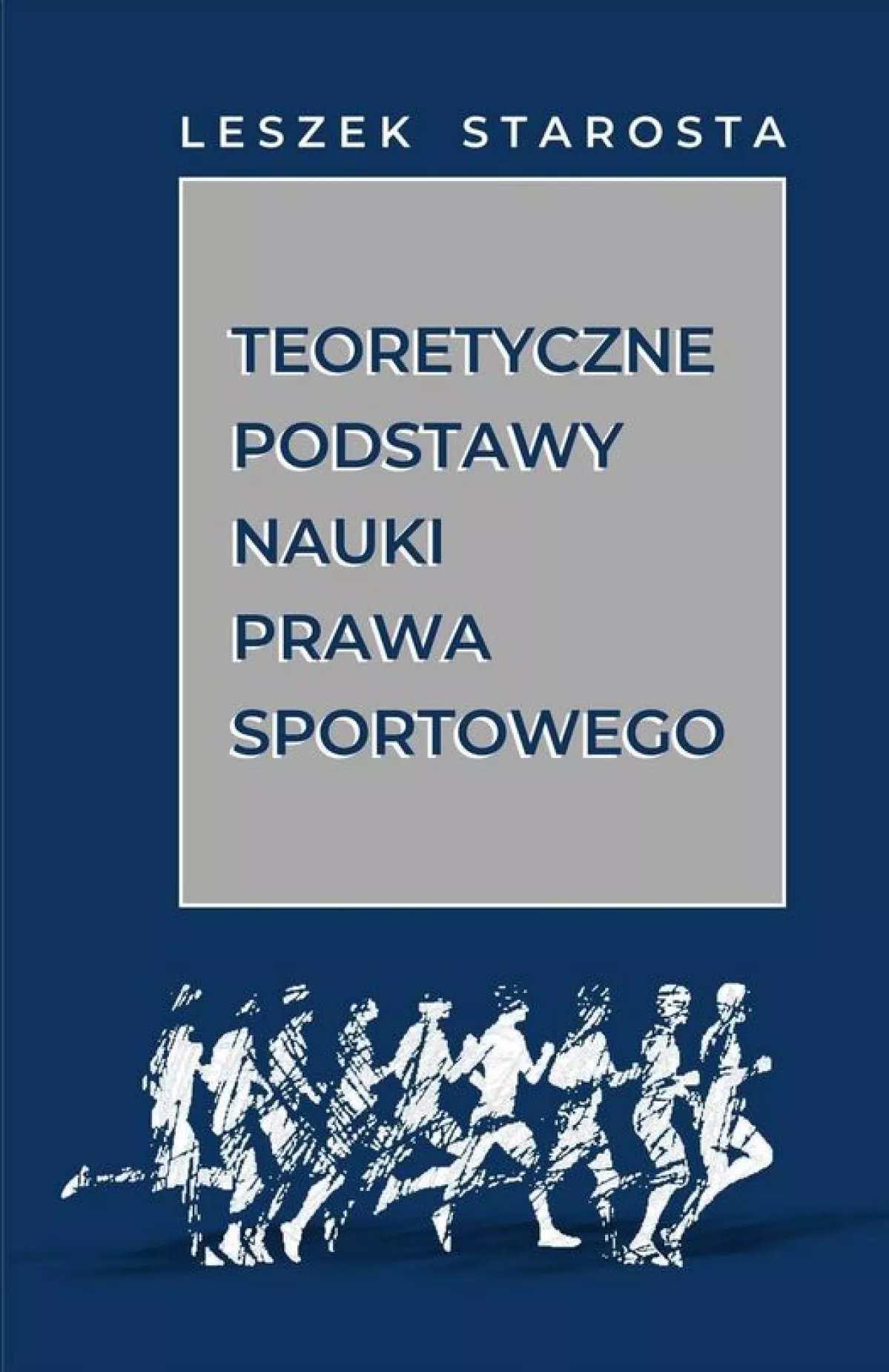
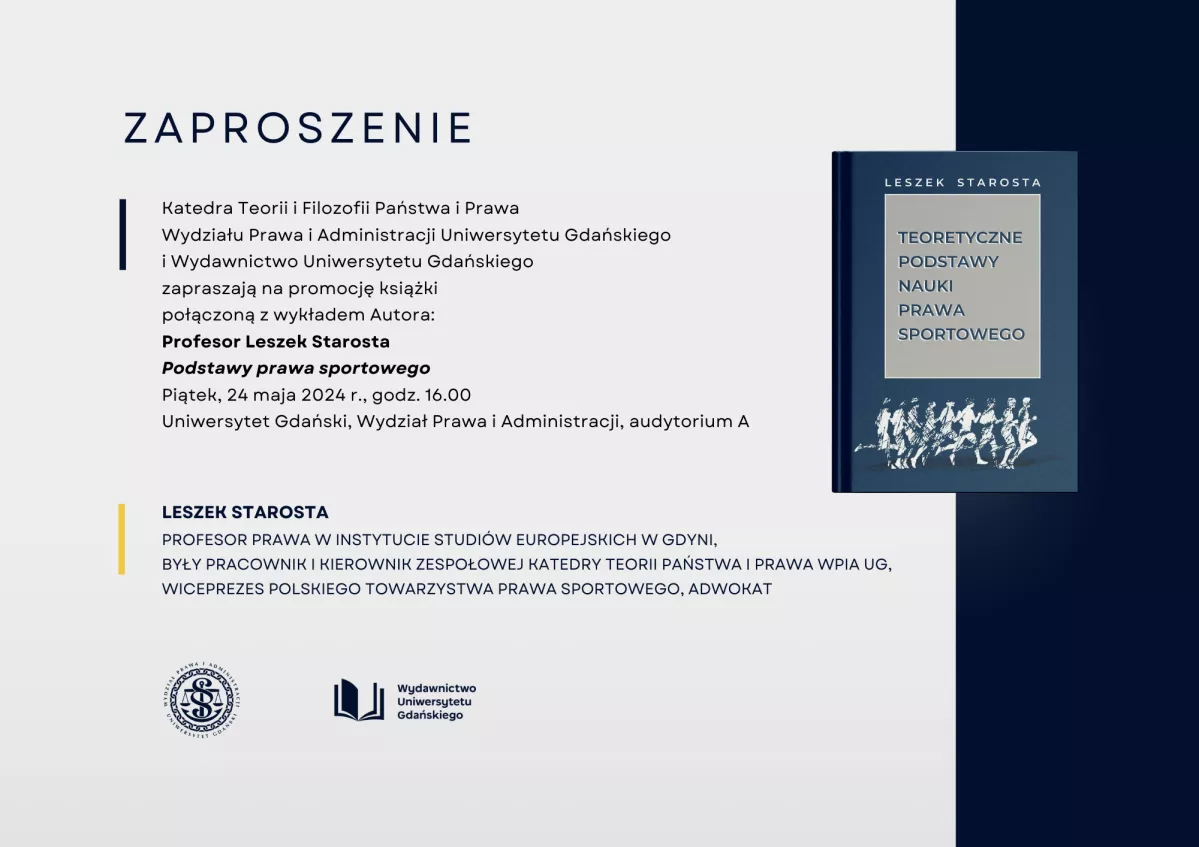
Wydawnictwo Uniwersytetu Gdańskiego i Wydział Prawa i Administracji Uniwersytetu Gdańskiego zapraszają na spotkanie organizowane w ramach promocji książki Prof. Leszka Starosty pt. „Teoretyczne podstawy nauki prawa sportowego”.

W ramach spotkania autorskiego Pan Profesor Leszek Starosta poprowadzi wykład stanowiący wprowadzenie do problematyki teorii prawa sportowego, po którym nastąpi sesja dyskusyjna.

Spotkanie odbędzie się w dniu 24 maja 2024 r. o godz. 16:00 w audytorium A Wydziału Prawa i Administracji Uniwersytetu Gdańskiego.

Leszek Starosta – profesor prawa w Instytucie Studiów Europejskich w Gdyni, były pracownik i kierownik Zespołowej Katedry Teorii Państwa i Prawa WPiA UG, wiceprezes Polskiego Towarzystwa Prawa Sportowego, adwokat.

[Sports law] Promotion of the book by Prof. L. Starosta "Theoretical foundations of sports law science"

The University of Gdańsk Publishing House and the Faculty of Law and Administration of the University of Gdańsk invite you to a meeting organized as part of the promotion of the book by Prof. Leszek Starosta entitled "Theoretical foundations of learning sports law."

As part of the author's meeting, Professor Leszek Starosta will give a lecture introducing the theory of sports law, followed by a discussion session.

The meeting will take place on May 24, 2024 at 4:00 p.m. in auditorium A of the Faculty of Law and Administration of the University of Gdańsk.

Leszek Starosta – professor of law at the Institute of European Studies in Gdynia, former employee and head of the Group Chair of the Theory of State and Law at the Faculty of Law and Administration at the University of Gdańsk, vice-president of the Polish Society of Sports Law, attorney.

Sprawdź pozostałe nasze wpisy

Wstecz
Prawo sportowe 06.02.2023
[Sports law] Sports Litigation & Arbitration in Poland

Settlement of legal disputes in sport, in particular those of a property nature, which can be colloquially referred to as "vindication in sport" or "sports vindication", is generally carried out in arbitration (arbitration proceedings), referred to as sports arbitration. In many cases, in order to properly resolve disputes, sports organizations have established specialized permanent arbitration courts (permanent arbitration courts) - Arbitration Tribunals, which by definition know the norms of sports law and understand the specificity of sport, which is to ensure proper recognition of cases and settlement of disputes in sport. The main purpose of recognition of the disputes in the field of broadly understood sports law relations by Arbitration Tribunals, i.e. excluding the jurisdiction of common courts, is the speed and efficiency of examining such disputes and the fairness of arbitration proceedings, in particular due to the knowledge of the regulations of sports organizations and associations referred to as sports law or more broadly as lex sportiva. It should be noted that the market of legal services, attorneys representing the parties (replacing the parties) in proceedings in sports law disputes, has also educated lawyers specializing in sports law, or law firms practicing in the field of sports law (sports law firms). Sports law also includes standards regulating the recognition of legal disputes in sport, in terms of the system, i.e. determining the bodies competent to consider such disputes - Arbitration Tribunals (permanent arbitration courts).Arbitration Tribunals can be classified as: 1) domestic and foreign, 2) operating within a given sport discipline (e.g. football or basketball). Sports law, sports law in poland, polish sports law, polish sports lawyer, sports lawyer in poland, disputes in sport poland, poland lex sportiva, sports law poland , football disputes poland, football court poland, footbnall litigation poland, law in sport poland, Legal disputes in sport and the resolution of legal disputes in sports (sports law, lex sportiva) is generally carried out in arbitration (ADR - Alternative Dispute Resolution), referred to as modification of sports arbitration. However, this is not a rule without exceptions. It should be emphasized that the main or most popular sports disciplines (basketball and football) have been developed by specialized permanent arbitration courts such as PSP (PZPN - Polish FA - Football Arbitration Court), Football Tribunal on FIFA: DRC (Dispute Resolution Chamber) , PSC (Players' Status Chamber), AC (Agents Chamber), STA (Polish Basketball Federation Arbitration Tribunal). Moreover, in Poland cases are also heard by the Arbitration Tribunal at PKOL (Polish Olympic Committee), and internationally by CAS / TAS - the Sports Arbitration Court, also known as the Sports Arbitration Court with its seat in Lausanne and branches in New York and Sydney.

Czytaj dalej
Prawo spadkowe 23.12.2024
[Prawo spadkowe] Ustalanie istnienia i treści oświadczenia ostatniej woli po śmierci osoby składającej oświadczenie testamentowe

W tym wpisie na blogu naszej kancelarii prawnej w Gdyni analizujemy najnowsze orzeczenie Sądu Najwyższego, które dotyczy kluczowych kwestii związanych z ustaleniem istnienia i treści testamentu po śmierci testatora. Sprawa, rozpoznana pod sygnaturą I CSK 438/24, wskazuje na istotne wyzwania w procesie dowodzenia, które mają znaczenie dla osób zaangażowanych w sprawy spadkowe. Ze względu na ustalanie istnienia i treści oświadczenia ostatniej woli dopiero po śmierci osoby składającej oświadczenie konieczne jest ustanowienie wymagań formalnych utrudniających sfałszowanie treści oświadczenia, zmuszenie umierającego do jego złożenia lub wykorzystanie stanu zdrowia wyłączającego świadome wyrażenie woli. Podstawą formą testamentu jest testament w całości spisany własnoręcznie (art. 949 § 1 k.c.). Wymóg ten nie służy wyłącznie utrudnieniu sfałszowania treści ostatniej woli, lecz służy także możliwości sprawdzenia, czy spadkodawca pisał testament w stanie wyłączającym świadome albo swobodne powzięcie decyzji i wyrażenie woli (art. 945 § 1 pkt 1 k.c.). Badanie pismoznawcze pozwala do pewnego stopnia na ustalenie, czy piszący działał pod wpływem dużego stresu, co w połączeniu z innymi przesłankami może pozwolić na ustalenie złożenia oświadczenia pod bezprawną groźbą. Badanie to może także ujawnić zmiany charakteru pisma wynikające z demencji lub innych zaburzeń psychicznych.

Czytaj dalej